Friday, September 30, 2011

New Inverts and Corals from Eastern Reef

Today, one of my local fish stores, Eastern Reef, acquired a new shipment of livestock.  My cleaning crew was getting low and needed to be replenished so I picked up twenty-five snails consisting of Astrea Snails, Cerith Snails, Nassarius Snails, and Black Conch Pygmy Snails.  

As well, I've always wanted to add a large conch snail to the reef, as they always remind me of the ocean.  Therefore, I also picked up a Florida Fighting Conch.


I also picked up some corals to add to the reef.  I added a Purple Plume Gorgonian, which are photosynthetic... meaning, they draw their food source from the light, as well as filtering the water column for food.  Notice the polyps on its branches, with which it filters the water.  This specimen is a fair size and I had to mount him onto live rock in order for him to stand.


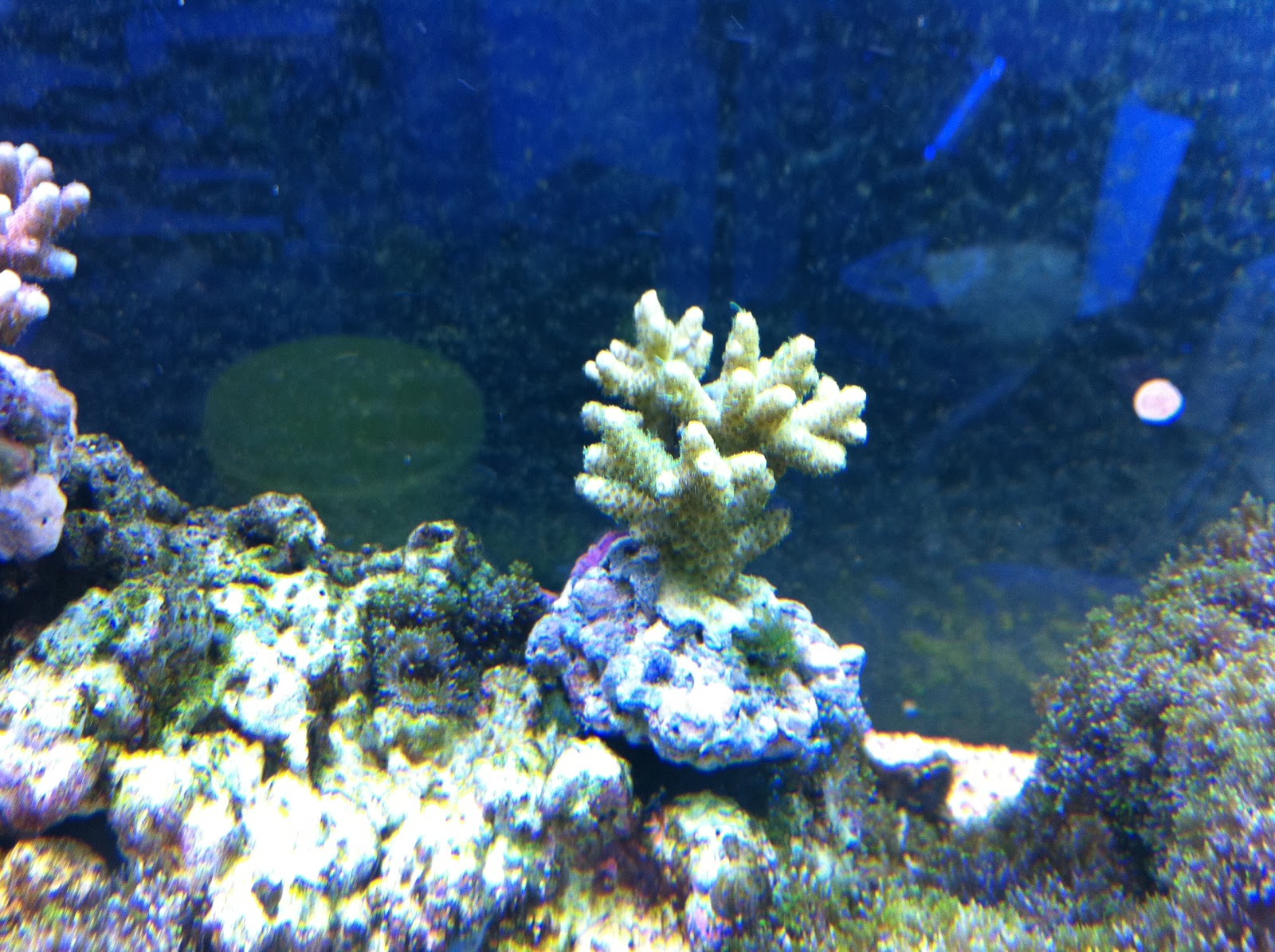
Also, I picked up a small frag of a Green Monti Cap (Monitpora Capricornus).  They are an SPS coral, but unlike the branching structure of an Acropora SPS, the Monti Cap tend to scroll and forms a cylindrical shape.  My frag is already beginning to scroll.


Monti Caps are fairly fast growers and, in a few months, I will upload another image to compare how quickly its grown.


Sunday, September 25, 2011

Changed RO/DI Filters and Resin

Today, I changed the filters and resin on my RO/DI (Reverse Osmosis De-Ionizing) system from Aquasafe Canada, which is rated 100 gallons/per day, five stage.

On average, they are supposed to be changed every 8 - 12 months, however, mine haven't been changed in a few years.  I took a TDS reading a few days ago and let's just say it wasn't far from what was coming out of my tap!  Luckily for me, our tap water is pretty good.  Anyways, it really motivated me to change the filters and resin.


I knew it was going to be a PITA to do, and sure enough as soon as I tried to remove the first filter chamber, it wouldn't budge.  My RO/DI unit came with plastic wrenches specifically made to remove these chambers.  I cranked and cranked until this happened:


I was not happy!  Anyways, now I needed to find a way to try and get these chambers off.  Luckily for me, my friend Pat had a strap wrench that I could try... thanks, Pat!  Again, I cranked and it still didn't budge.  I was turning counter-clockwise, the same direction as if you were unscrewing lids, screws, etc...  Out of frustration, I decided to try unscrewing in the other direction, and after a couple of cranks, it moved!

Here's was the issue... when opening these chambers, you're actually unscrewing the chamber itself, not the lid.  That is why the direction was reversed.  Anyways, I will definitely remember next time.

I quickly changed the filters and resin, hooked up the RO/DI unit and its currently purifying my water.  Later tonight, I will do another TDS reading to test the water quality.

Monday, September 19, 2011

New SPS Corals

One of my local fish stores was having a two for one sale on corals, to make room for a new order.  Well, I couldn't pass up the deal.  My favorite corals are SPS (small polyp stoney) corals. We picked up four in total.


Green Slimer from Bali


Pink Millipora from Fiji


Yellow Millipora from Bali


Blue Acropora from Fiji


As I was putting the corals into the tank, I noticed something moving within the Pink Millipora.  It is common to find tiny acropora crabs that live in SPS corals.  They are commensal and have a symbiotic relationship with the coral, as they eat most parasites (ie., red bugs) that would harm the coral.  However, there are some tiny crabs that are harmful to the SPS coral, as they eat the coral's polyps.  I found a tiny gorilla crab, which is harmful, and so I picked him out and into the sump he went.  The common rule is: "If the crab's exterior is smooth, its friendly.  However, if the crab's exterior is hairy, its harmful".  Here is the gorilla crab before I threw him into the sump.